Skin Type Test: How to Identify Your Skin Type at Home and Choose the Right Care
Every skincare decision you make — from cleanser to serum to SPF — depends on one piece of information: your skin type. Yet many people choose products based on marketing or trial and error without ever properly identifying what their skin needs. The result is wasted money, unnecessary irritation, and routines that work against the skin rather than with it.
After more than thirteen years of working with clients as a professional cosmetologist, I can tell you that the single most impactful thing you can do for your skin is to understand it first. A proper skin type test at home does not require a dermatologist visit or expensive equipment. It takes about two hours — and the information you gain will reshape how you approach skincare from that point forward.
Your skin type is determined primarily by genetics — how much sebum your glands produce, how well your skin retains moisture, and how reactive it tends to be. When you use products formulated for a different skin type, you are not just getting suboptimal results. You may be creating new problems: clogged pores, dehydration, increased sensitivity, or breakouts that were never there before.
Getting your skin type right means fewer products, less guesswork, and better outcomes. It is the foundation everything else is built on.
This is a reliable method used by cosmetologists to determine skin type without instruments. If you have ever asked yourself "how to know my skin type" without visiting a specialist, this is the test to try. All you need is a gentle cleanser, a clean tissue or blotting paper, and about two hours of patience.
Wash your face with a mild, pH-balanced cleanser — nothing with active acids, exfoliants, or heavy oils. Pat dry gently. The goal is to start with a completely clean, neutral surface.
Do not apply any products for the next two hours. No moisturizer, no serum, no SPF. Stay indoors at a comfortable room temperature. This waiting period lets your skin return to its natural baseline — the state it defaults to without any external influence.
After two hours, look at your face in good natural light. Then gently press a clean tissue or blotting paper against different areas: forehead, nose, chin, and both cheeks. Now read your results.
What the tissue shows — and how your skin feels — will tell you which of the five main skin types you fall into. This is the part where the common question — how to know my skin type oily or dry — gets a clear answer.
- Tissue stays clean, skin feels comfortable and soft — Normal skin
- Tissue stays clean, skin feels tight, rough, or slightly flaky — Dry skin
- Tissue picks up oil from all areas — Oily skin
- Tissue picks up oil only from the T-zone (forehead, nose, chin) while cheeks feel normal or dry — Combination skin
- Skin shows redness, feels warm, or reacts with tingling — Sensitive skin
Important nuance: If your T-zone feels dry but your cheeks are shiny, this is not typical combination skin. It often signals a compromised skin barrier, where the skin overproduces sebum in response to dehydration. In this case, barrier repair should come before skin-type-specific products.
Normal skin is balanced. It produces enough sebum to stay hydrated without excess shine, pores are small to medium, and it tolerates most products well. If this is your result, your primary goal is maintenance — keeping this equilibrium intact as you age and as environmental conditions change.
A gentle cleanser, a hydrating serum, and daily SPF form the core of a normal-skin routine. Our Vitamin C Cleansing Foam provides a thorough yet non-stripping cleanse, while the Collagen Booster Serum delivers deep hydration with marine collagen and hyaluronic acid to support long-term skin health.
Dry skin produces insufficient sebum. It often feels tight after cleansing, may flake or crack in colder months, and tends to show fine lines earlier than other skin types. The surface can look dull because dead skin cells are not shedding efficiently without adequate moisture.
The priority for dry skin is lipid-barrier support and deep hydration. Avoid foaming cleansers that strip natural oils — our Purifying Cleansing Gel cleanses without disrupting the moisture balance. Follow with the Hydra Tonic, then seal in with the Evidence Lifting Cream for rich, lasting nourishment. Once or twice a week, the Gentle Enzym Peel clears dead cells so moisturizing products can penetrate effectively.
Oily skin overproduces sebum, leading to visible shine, enlarged pores, and a higher likelihood of breakouts. Many people treat it aggressively — harsh cleansers, astringent toners, skipping moisturizer — but this almost always backfires. Stripping the skin triggers even more oil production as a compensatory response.
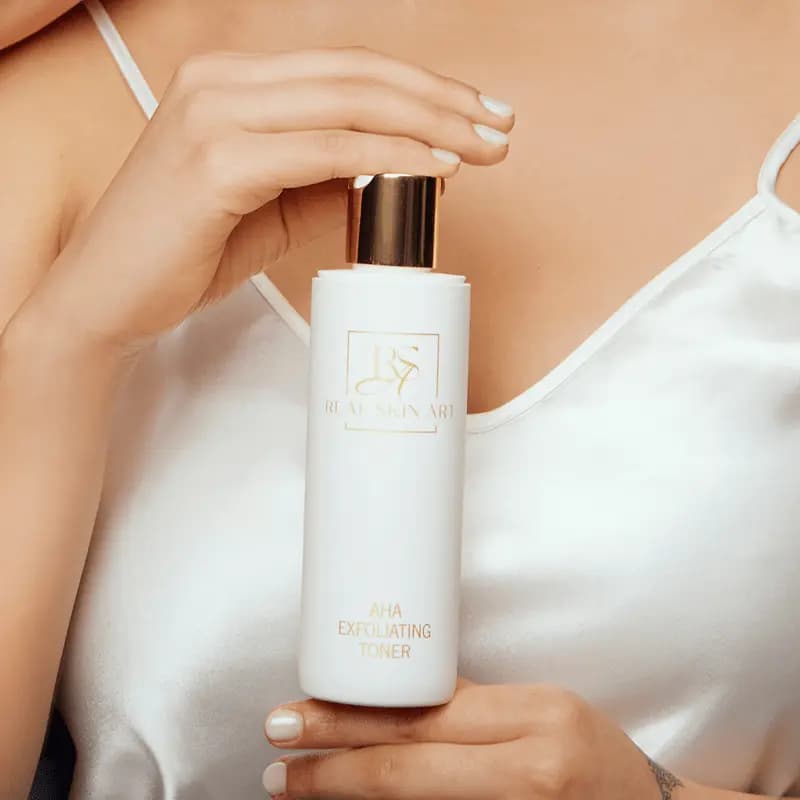
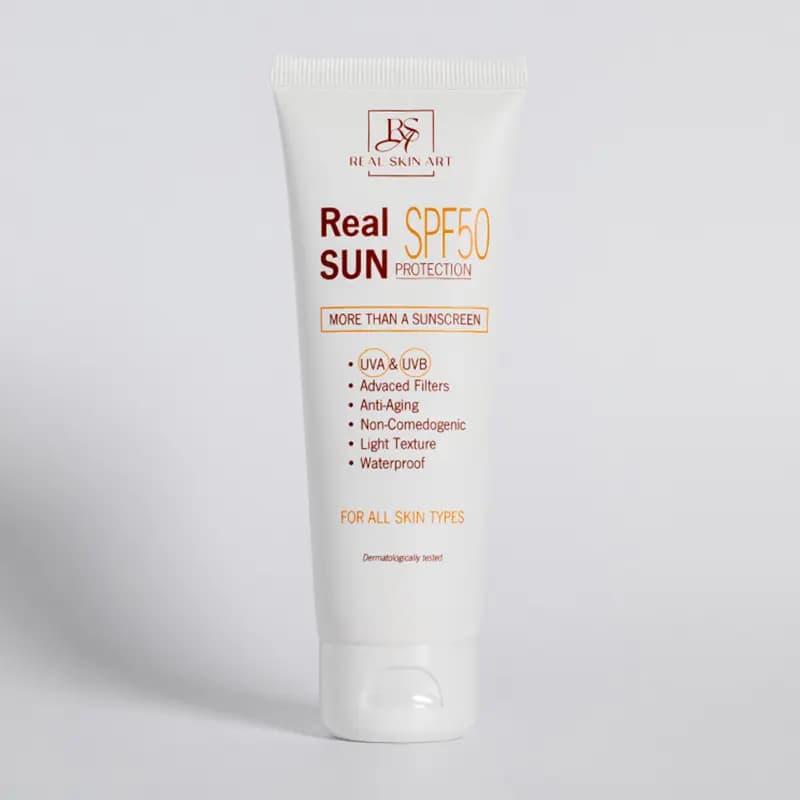
Oily skin still needs hydration — just the right kind. Our AHA Exfoliating Toner regulates sebum and clears congested pores, while the White Tea Firming Moisturizer delivers water-based hydration with a breathable finish. For breakout-prone skin, the Purifying Cream provides targeted care without clogging pores. Always use SPF — our Real SUN SPF 50 is lightweight enough for daily wear even on oily skin.
Combination skin is the most common type and the one that causes the most confusion. The T-zone behaves like oily skin while the cheeks tend toward normal or dry. People with combination skin often use products that address one zone but aggravate the other.
The key is balancing ingredients rather than choosing extremes. The AHA Exfoliating Toner works well across combination skin — it regulates oil in the T-zone without over-drying the cheeks. A lightweight, non-comedogenic moisturizer like the White Tea Firming Moisturizer provides even hydration across all zones. If the cheeks feel dry in winter, you can layer the Collagen Booster Serum on those areas before moisturizing.
Sensitive skin reacts easily — to new products, environmental changes, stress, or temperature shifts. It may present as redness, stinging, or visible irritation. Sensitivity can accompany any other skin type, making it both a type and a condition.
The first rule is simplicity: fewer products, fewer ingredients, and always patch-test before introducing something new. Our Vitamin C Cleansing Foam is gentle enough for reactive skin, and the Skin Art Sheet Mask delivers soothing hydration without over-application risk. Avoid physical exfoliants — if you want to exfoliate, the Gentle Enzym Peel uses enzymatic action rather than abrasion, a much safer choice for skin that flares easily.
One of the most common sources of confusion in skincare is mixing up skin type with skin condition. Your skin type is largely genetic and remains relatively stable throughout your life. It describes how your skin fundamentally behaves — how much oil it produces, its baseline sensitivity, its pore structure.
Skin conditions are temporary states caused by external or internal factors. Dehydration, acne, hyperpigmentation, rosacea — these are conditions. You can have oily skin that is simultaneously dehydrated, or normal skin with temporary acne triggered by hormonal changes.
Why does this matter? Because conditions require targeted treatment on top of your skin-type routine, not instead of it. If you have oily skin with dehydration, the answer is not to switch to a dry-skin routine — it is to add hydrating products to your existing routine. Treating conditions without respecting your underlying type creates routines that solve one problem while causing another.
Strictly speaking, your genetic skin type does not change. But the way your skin expresses that type can shift noticeably due to several factors — and understanding this prevents the mistake of constantly reinventing your routine based on temporary changes.
Seasonal shifts are the most obvious — oily skin often produces less sebum in winter, while dry skin can feel adequate in humid summer months. Hormonal changes — puberty, pregnancy, menopause, monthly cycles — affect sebum production and sensitivity significantly. Many women notice their skin becomes oilier or more breakout-prone at certain points in their cycle.
Aging also plays a role. Sebum production naturally decreases over time, which is why people who had oily skin in their twenties often find it becoming drier in their forties. This does not mean your skin type has fundamentally changed — but your routine needs to evolve. Adjust hydration levels seasonally, and reassess after major life transitions. The skin type test described above can be repeated any time your routine no longer feels right.
Knowing your skin type is the first step — building the right routine is the second. For a more detailed assessment, our professional SkinQuiz walks you through a guided evaluation and provides tailored product recommendations based on your results.
Your skin type is not a limitation — it is a roadmap. Once you understand what your skin needs, choosing the right care stops being overwhelming and becomes straightforward. Every product in the RealSkin Art line is formulated with this principle in mind: professional-grade ingredients, honest formulations, and results you can see.
Syuzanna Schenk
Licensed Cosmetologist, Founder of Real Skin Art